You are using an outdated browser that is no longer suitable for modern web standards.
Please update (or change) your browser to view our site as it is intended to be seen. Thank you.

Robert "Bob" Murphy
1902 - 1971
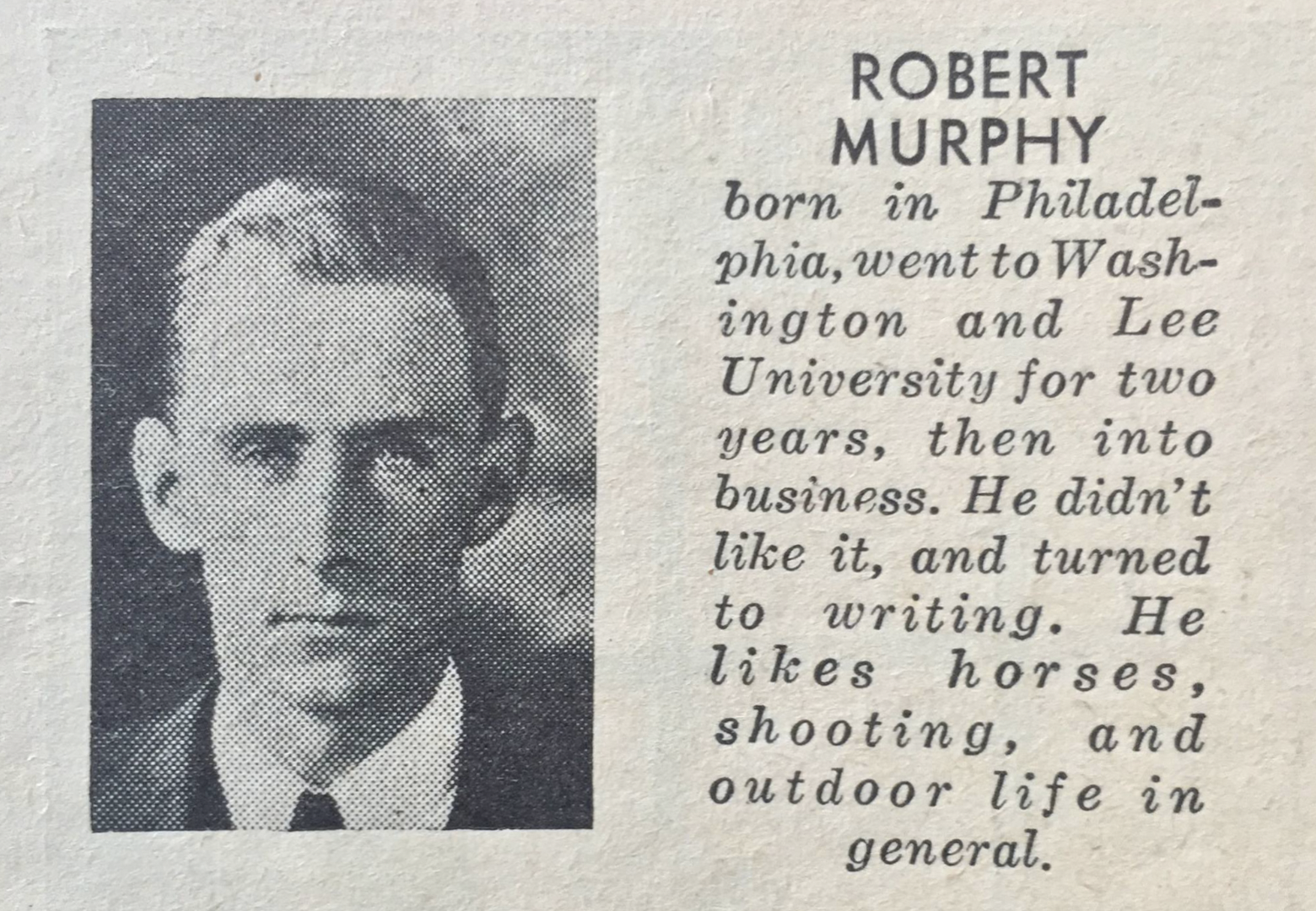
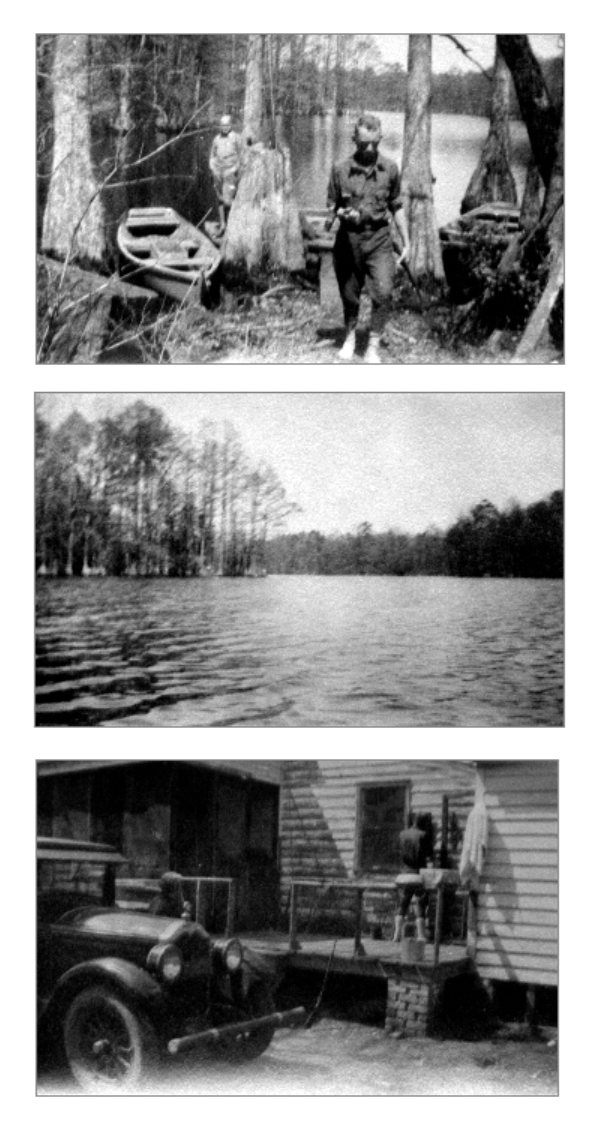
The son of William Robert Murphy & Mary Bryant Murphy, “Bob” Murphy was born a few miles southeast of Philadelphia near the Delaware River in Ridley Park, Pennsylvania. His father was successful in early air conditioning for commercial buildings. Graduating from high school, Murphy spent two years at Washington and Lee University in Lexington, Virginia, before joining his father’s business, but warehouse work held no appeal. Murphy was enraptured by the out-of- doors early on, told autobiographically in The Pond which detailed his youthful adventures around today’s Chickahominy Wildlife Management Area.
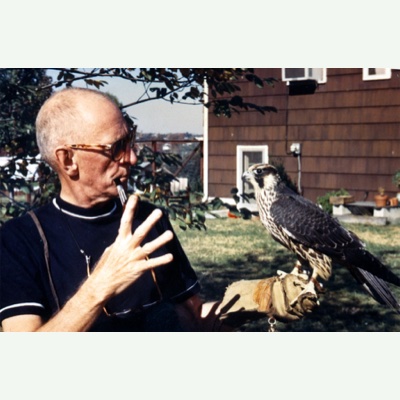
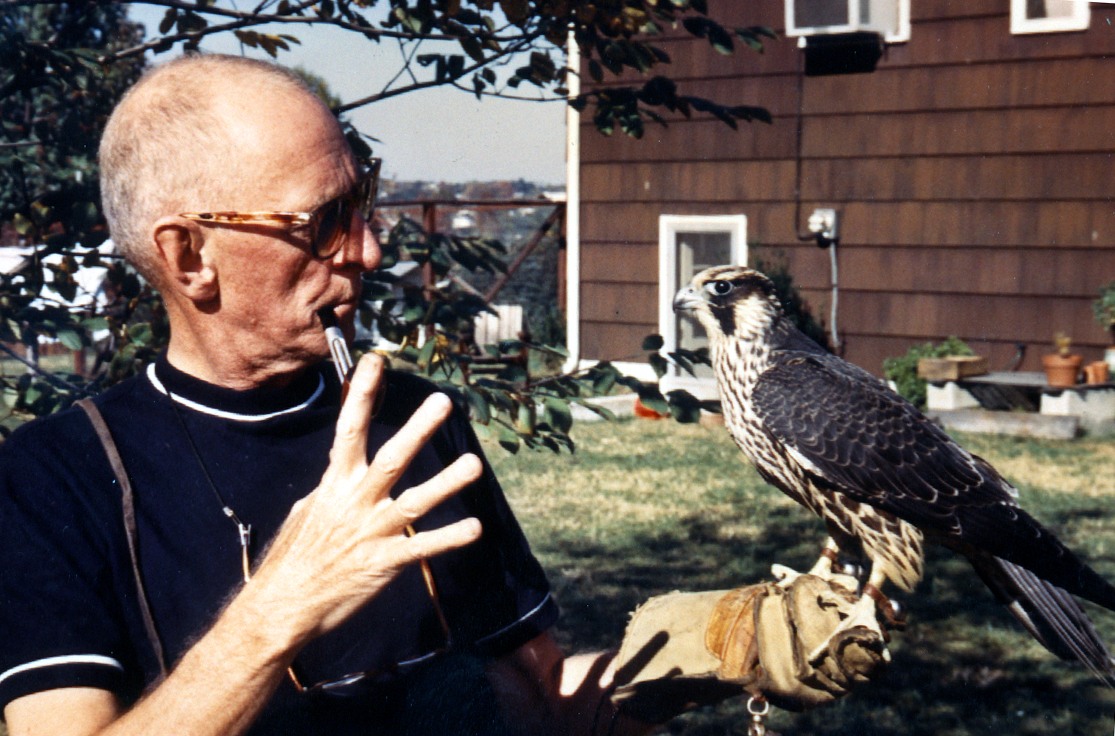
Murphy married Isabel Palmer in 1928, the couple taking their honeymoon in Cuba, returning through New York City on a coaling steamer. Between then and 1945 Murphy discovered falconry, but exactly how remains unsaid; a voracious reader with a sesquipedalian vocabulary, falconry may have grabbed him early on. However it happened, his early falconry influencers were his southeastern Pennsylvania neighbors: Dan Mannix, a wildlife author and photographer; Jim Rice, whose jeep was important in capturing passenger birds at Assateague Island; and Bob and Sally Stabler.
Beyond active duty age in his late 30s when registering for military service, Murphy assisted the World War II effort by producing patriotic “dispatches” for the US Army, Morale Division, in Washington, D.C. He afterward joined the Saturday Evening Post as an associate editor. Isabel died from leukemia the same year.
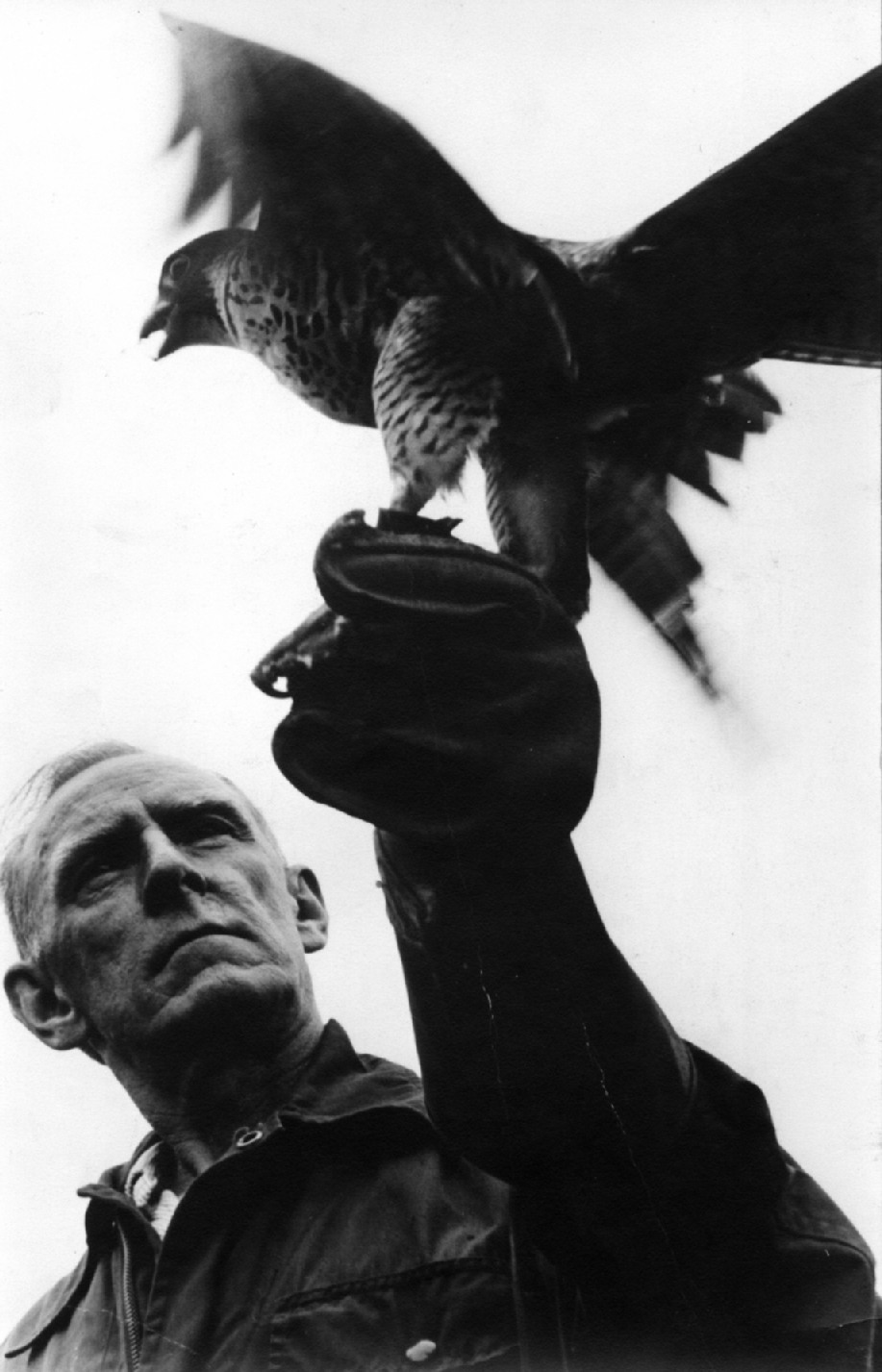
Teaching biology to aspiring schoolteachers at the University of Pennsylvania was one of Bob Stabler’s jobs. He had a student, Jean Whittle, who lived near Kennett Square on a big farm with an outsized barn full of roosting pigeons. Stabler and Murphy went to Kennett on a pigeon- trapping mission, and that’s when Murphy met Jean. They were married in March 1946, with a honeymoon in Bermuda (where Jean threw her gulf clubs into the ocean). Son Shane was born the following February, about the same time Murphy was inducted into the Explorers Club for his studies of nesting Peregrines in the high Arctic on Baffin Island. Shane’s sister Molly Jean arrived in October 1953.
Murphy became senior editor with the Saturday Evening Post, penning numerous fictional adventure and romance stories, travel articles, and tales of nature, some telling of falconry. Times, however, were changing in the world of periodicals. The Post was supplanted by large, colorful, pictorial weekly’s such as Life and Look and, of greater lasting importance, television. By 1963 Murphy was working out of his home, as always with a bird on his fist at the dinner table.
Murphy and his family lived near Westtown, Pennsylvania, throughout his Saturday Evening Post years, which coincided with his 20-plus years of flying peregrines. In his early 60s when the Post failed, Murphy moved his family to Prescott, Arizona. He quit falconry at the same time, in part because civilization was closing in wherever he looked, he told a friend, but also to help ameliorate the devastating effects of DDT on birds’ eggs.
Murphy was represented by two literary agencies during his writing career, the first being Brandt & Brandt. In the mid-1940s he began a much longer and more profitable association with Harold-Ober Associates, represented there by the legendary literary agent Dorothy Olding who also named his son. Murphy’s collected works are housed at Gotlieb Archival Research Center at Boston University, Special Collections, accession number 161.
Robert Murphy was known for his deep knowledge of animals. His last book, The Stream, concerned Little Bushkill Creek in northeast Pennsylvania; he was a founding member of the Little Bushkill Rod & Gun Club, and spent many weekends there hunting and fishing. The Stream showcases his knowledge of animal behavior while telling of his growth into an ardent conservationist.
—Shane Murphy, June 2024